Join The Yarnist July 6–10 and knit a mini circular yoke sweater while learning how real sweaters work: construction, gauge, fit, shaping, sleeves, finishing, and what to do before you cast on the full-size version.
The Yarnist Presents
Mini
Sweater
Challenge
Circular Yoke Edition
Hosted by Yarnist Founder Johnny Vasquez
Featured Speaker
“Johnny convinced me I can knit a sweater to fit. His enthusiasm is contagious.” — Brigitte Coffey Werts
Featured Speaker
“Johnny’s advice to take small steps each day will transform my knitting. Loved his class.” — Michelle Cannon
Featured Speaker
“Johnny’s presentation was the best for me. He empowered me to knit on my own terms.” — Kate Pepina
Learn the Shape
Construction
A mini sweater lets you see the whole structure: neckline, yoke, body, sleeves, finishing, and the places where fit decisions happen.
Practice the Skills
Gauge + Fit
You’ll learn why gauge matters, how size changes quickly, and why the little decisions in a sweater can turn into big surprises.
Plan the Real One
Circular Yoke
The tiny sweater is the practice run. The next step is understanding how to use those same skills on a real circular yoke sweater.
A full-size sweater is a commitment: yarn, time, gauge, measurements, fit, sleeves, and the tiny voice in your head whispering, “What if this does not fit?”
That’s why we’re using a mini circular yoke sweater as the learning tool. It is small enough to finish, but real enough to teach the skills that matter.
The tiny sweater is cute. The skills are serious.
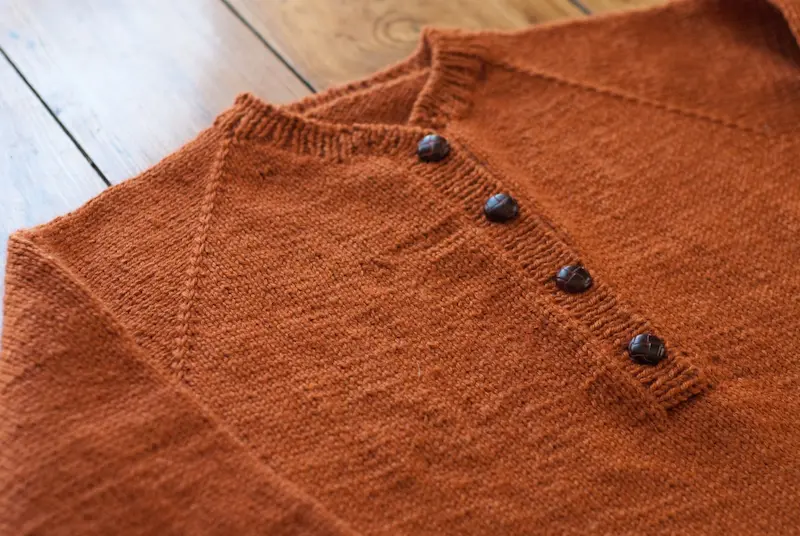
Start the mini sweater and understand the basic structure: neckline, yoke, body, sleeves, and why circular yokes behave differently from other sweater styles.
As the body begins to take shape, we’ll talk about measurements, finished garment size, ease, and why choosing by bust or chest alone can get you into trouble.
Gauge is not busywork. It decides the size, the fabric, and whether your sweater behaves like a sweater or a cautionary tale with sleeves.
Learn where circular yoke sweaters can go sideways, what to check before you keep knitting, and how the mini sweater teaches the same logic.
Finish your tiny sweater, then connect what you learned to your next full-size circular yoke sweater: pattern, gauge, measurements, yarn, and next steps.
Founder of The Yarnist • Your Guide for the Challenge
I’ve been teaching knitters for 15 years, and one thing comes up again and again: knitters are not usually afraid of knitting. They’re afraid of wasting time, yarn, and hope on a sweater that does not work.
Sweaters can feel mysterious from the outside. But once you understand the structure, the measurements, the gauge, and the decision points, the mystery starts to disappear.
That’s what this challenge is designed to do. We’ll start with a tiny circular yoke sweater, use it to understand the big sweater skills, and give you a clearer path toward the full-size version.
This is practical, hands-on, and intentionally small. Because sometimes the fastest way to stop fearing the big thing is to knit the tiny version first.

Because the mini sweater is the perfect starting point. It gives you a real, finishable project and a practical way to understand circular yoke sweaters before you commit to a sweater quantity of yarn.
The free challenge includes the daily pre-recorded trainings. If you want the workbook, lifetime replays, bonus lessons, and live Q&A, you’ll have the option to upgrade to the Front Row Pass after you register.
Each day gives you one focused training and one clear knitting assignment. By Friday, you’ll have a finished mini sweater and a much better understanding of circular yoke sweaters.
Less than 50g of any worsted weight yarn, plus double pointed needles or another method for knitting small circumferences in the round. You’ll also want basic notions like stitch markers, scissors, and a tapestry needle.
The free challenge includes the daily trainings. Front Row Pass holders get the printable field guide, lifetime replays, bonus lessons, and a live Q&A session for help with the challenge.
Right now, a full-size sweater may feel like a lot: measurements, gauge, yarn, shaping, sleeves, and the terrifying possibility of knitting half a sweater before realizing something is off.
After this challenge, you’ll have worked through the whole sweater shape on a tiny scale. You’ll understand the parts. You’ll see where fit decisions happen. And you’ll have a much clearer picture of what you need before knitting the real thing.
This is not about pretending a mini sweater is the same as a full-size sweater. It’s about learning the structure before the stakes get expensive.
“The tiny sweater is the map. The real sweater is the road trip.”
— The Yarnist
Join the FREE Challenge →
These knitters came in nervous about sweaters and left understanding what to do next.
“I’ve been knitting for 25 years and I’m now ready to knit a sweater.”Dora Johnson
“I doubt that I’ll ever follow a published pattern again! Thank you for this knowledge!”Karen Hallowell
“I’ve been knitting for 45 years. You gave me different ways of viewing concepts like ease and color theory.”Annie Evans
“So looking forward to knitting a sweater that fits without having to decipher and recalculate someone else’s pattern.”Deb Killenbeck
“I like how you are breaking down sweater making into a total science.”Kay Scott
“It really helps to understand how to construct a sweater so I can be a more fearless knitter. Less mistakes and frogging.”Dana Owen
“I hate doing gauge swatches, but now I finally understand why they matter. The way you explained it changed everything.”Judy Mannaberg-Goldman
“So many questions were answered and I learned things I didn’t even know I didn’t know.”Sharon Leah
“I’ve been knitting for 25 years and I’m now ready to knit a sweater.”Dora Johnson
“I doubt that I’ll ever follow a published pattern again! Thank you for this knowledge!”Karen Hallowell
“I’ve been knitting for 45 years. You gave me different ways of viewing concepts like ease and color theory.”Annie Evans
“So looking forward to knitting a sweater that fits without having to decipher and recalculate someone else’s pattern.”Deb Killenbeck
“Working through all the measurements and percentages has really been helpful. I haven’t taken notes this fast in YEARS!”MsCongoPrincess
“I’ve always knit hats, blankets, and afghans. I was too intimidated to try a sweater. But now, thanks to you, I think I’m ready to try.”Jandebar
“Ease has always confused me. Talking about it in percentages and proportions made it click for the first time.”Susan Saundry
“This workshop gave me the confidence to start and finish a sweater.”Kim Benjamin
“I’ve been knitting over 50 years and I always thought that design was such a mystery. This is a great approach.”Cindy Compert
“Wish I’d watched this before knitting a sweater with wild variegated yarn. Never again. Now I know how to choose yarn on purpose.”Kris Evert
“This looks complicated, but if you simply plug in the numbers, it makes sense!”Deb Killenbeck
“Working through all the measurements and percentages has really been helpful. I haven’t taken notes this fast in YEARS!”MsCongoPrincess
“I’ve always knit hats, blankets, and afghans. I was too intimidated to try a sweater. But now, thanks to you, I think I’m ready to try.”Jandebar
Join The 5-Day Mini Sweater Challenge and learn circular yoke sweater skills on a project small enough to finish in one week.
Five days. One tiny sweater. Big sweater confidence.
Free to join • Daily pre-recorded trainings • Front Row upgrade available